 |
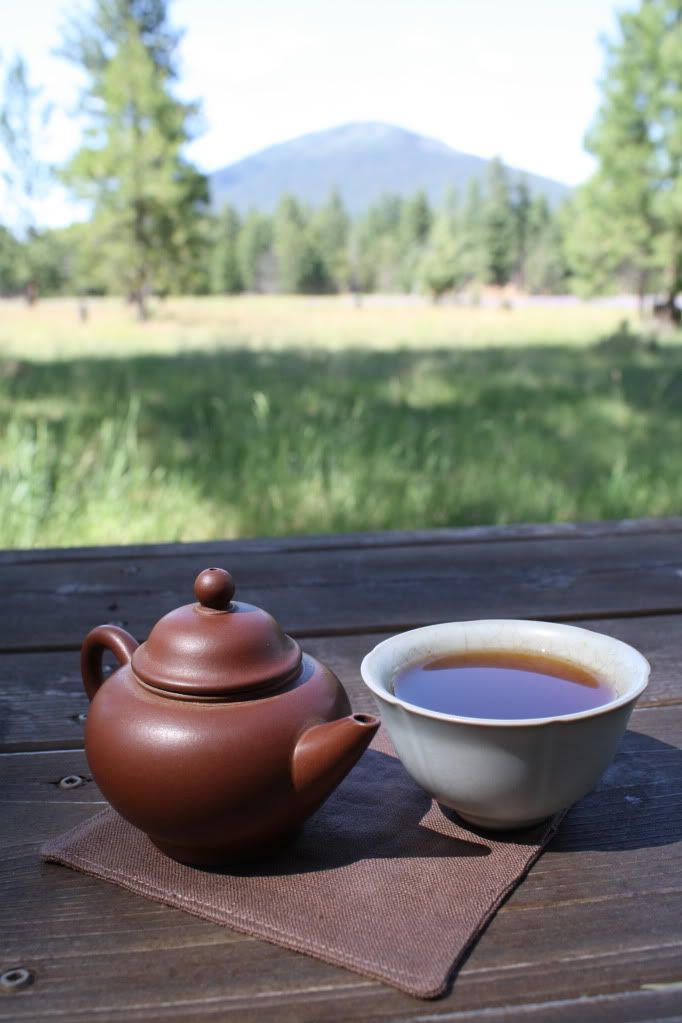
| Not the blackest butte I've ever seen. Please forgive the titular pun. |
Perhaps unsurprisingly, it's also been a week of numerous minor tea learning experiences at the mild, reflective pace of a good vacation. Compared with my last trip, I brought almost everything but the kitchen sink (in terms of tea équipage, that is). The tetsubin, two yixing pots, a gaiwan, and a dozen or so different types of tea. Lesson #1: Even on a "fully-equipped" vacation, it's probably still smartest to focus on one tea type, because you probably won't make full use of all the different teas you brought, and you get the benefit of close comparison between different teas of the same genre. Although I made green tea and a delicious Dong-Ding, I mostly drank aged pu-erh. If I had left the other teas at home, I could have left the gaiwan and one of the pots, not to mention the tea storage space--ah, the joys of over-packing to avoid silly fear of "not enough variety."
It was a pretty decadent week, since I usually only drink an aged pu-erh every couple of weeks, but all of the repetition was illuminating. Firstly, a muted session with an '80's shou/sheng brick reminded me that different weather conditions (it's quite dry here) can affect my sensory faculties and, perhaps, the performance of the tea leaves themselves. Secondly, the failure of an extremely tight chunk of '80's tuo to fully unfurl reminded me that breaking up large chunks (as gently and possible, even if it's difficult) greatly improves the quality of the session--you don't have to separate individual leaves, but getting the chunk into quarters is significant. Thirdly, a sublime one-off session with my 1993 7542 reminded me how not all sessions with a single tea are created equal and that there's no shame in the notion that a certain chunk of the cake might be contain a just right combination of leaves, while others may not (Lessons #2-4, respectively).
The final learning experience relates to perspective. Two years ago--drinking many of the same teas I drank this week, incidentally--I was deliriously eager to try my tetsubin and teas out with mountain spring water. With a couple more years' experience under my belt, my attitudes to spring water and tea preparation in general have mellowed quite a bit. Whether it's my rustic palate or my lackadaisical approach, the difference between filtered/Lynnwood spring/Black Butte spring water is not especially apparent to me. Maybe with some close attention I could tell a difference, but that might spoil the relaxation! Probably the most enjoyable part of making tea with this spring water is retrieving it--it's really enjoyable to collect the fresh, cold water straight out of the earth and reflect on and feel connected to the elements that come together for a good tea session (definitely nowhere close to the extent that those who are attentive to Chinese elemental tradition do, though). The water tastes amazing right out of the ground--perfectly cold for a hot day after the bike ride to the spring. It's also interesting to note that, two years after acquiring the tetsubin and using it with spring water, it still hasn't developed much of a mineral scale/patina at all. I was really nervous when I first noticed the patina was receding, but now I'm little less anxious; the thing still makes good tea water, and preferable to my other kettles--even to my simpleton's palate. If anything, I'm wondering whether or not it's really necessary to drive up to Lynnwood to regularly collect water, since the patina hasn't returned. We'll see after I use up the 10 gallons of water I'm bringing back with me.
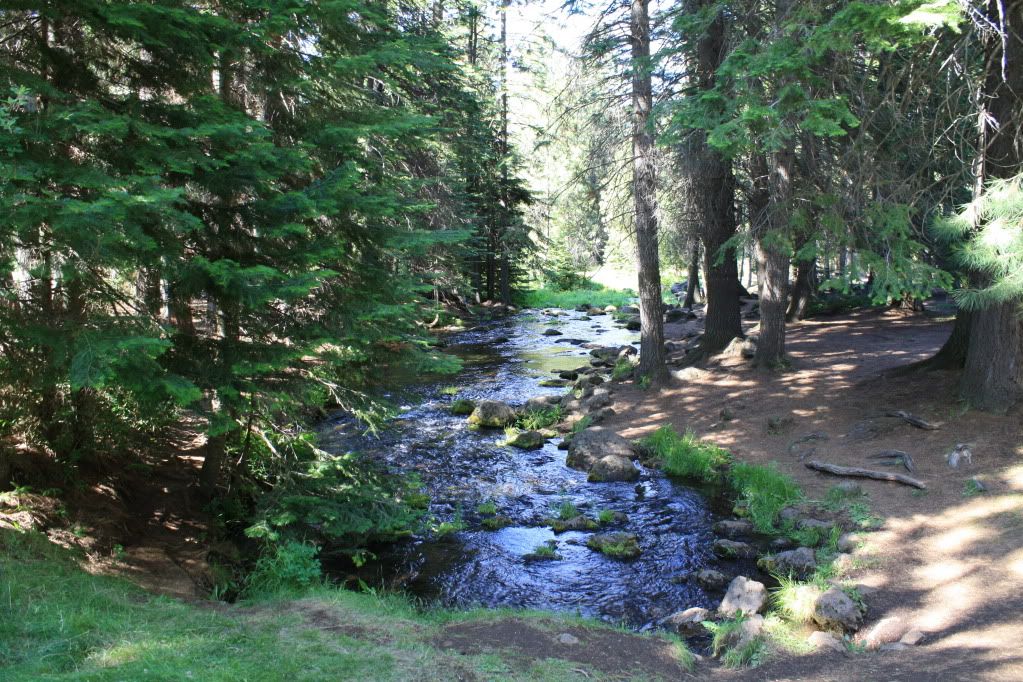 |
| Where'd that come from? |
The spring is a great spot--issuing straight out of the ground below where I stood to take this photo and running across the ranch. There's also a stone bench--a great spot to sit and read, write or quietly enjoy the babbling stream, insects, rodents, birds and wind through the pines.
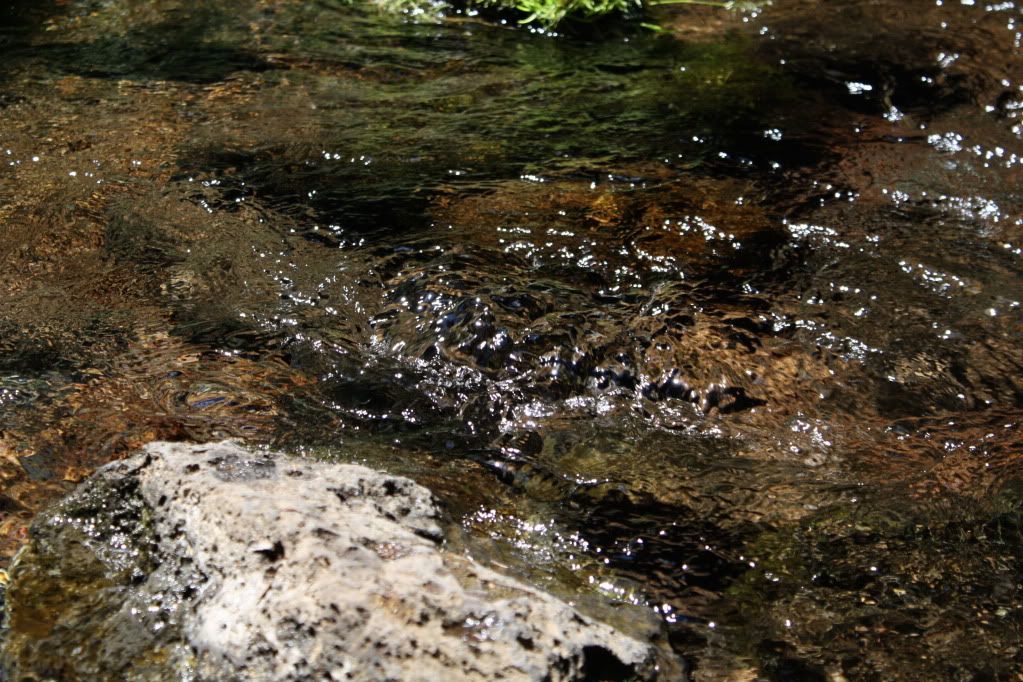 |
| Water mushrooms. |
Unlike the Lynnwood spring, which is technically an "artesian well" (meaning that it was originally human-drilled and since then produces water without pumping), this is an honest-to-goodness spring, bubbling straight out of the ground. While not quite as convenient for jug-filling, it's an invigorating sight to behold. Here's to drinking tea in the aid of relaxation and contemplation, and to continually learning about it without getting too scientific!


