May 16, 2011

Tea on Vacation

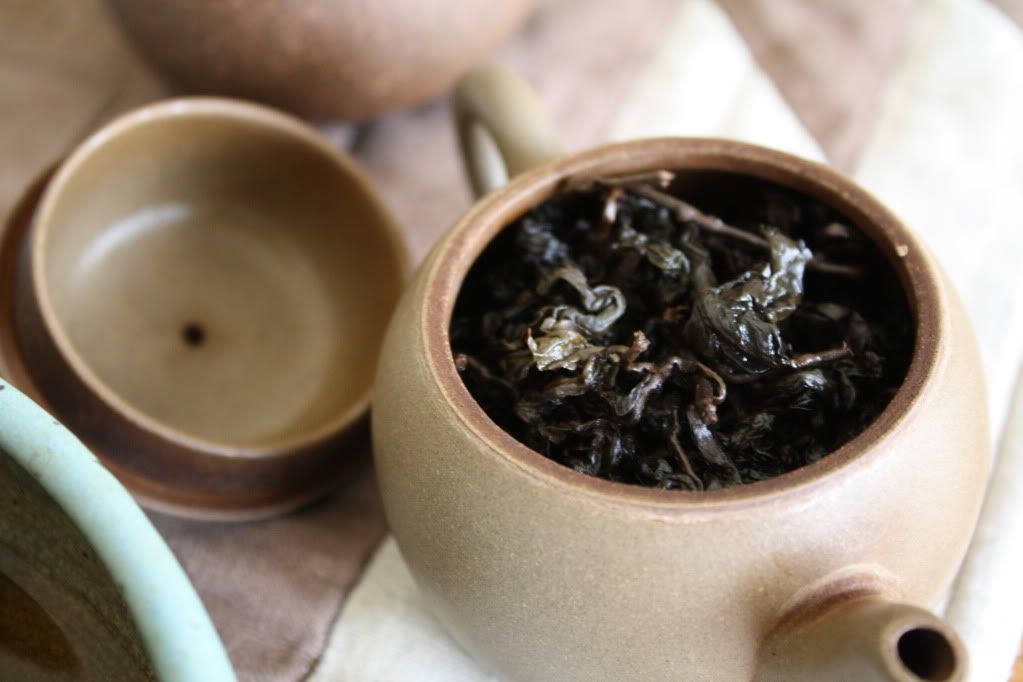
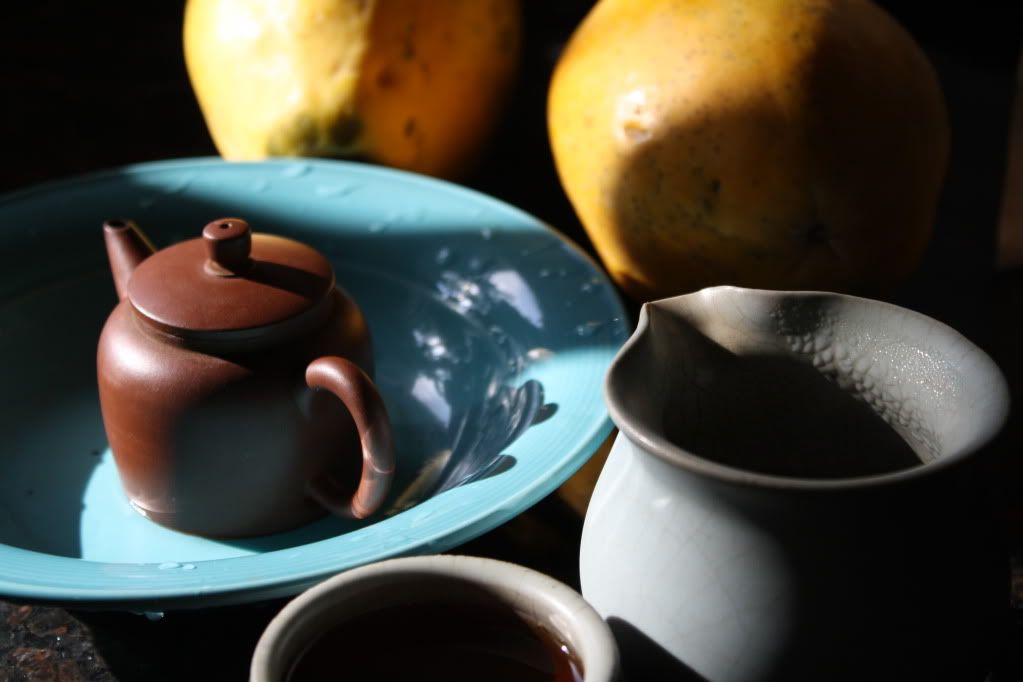
Kaua'i felt like the inside rim of that fair cup.

Whenever I leave home for more than a couple of days I end up having to deal with the tea issue--how much and which kinds to pack (if any), what type of equipment to bring, etc.  If I'm going somewhere to work I'll often bring the whole setup (tetsubin, hotplate, multiple teas and yixing wares), but probably more often I'll just bring a bag of everyday yancha to quickly throw in a mug with some hot water.  Unsurprisingly, most of my traveling companions and family members aren't too jazzed about an hour-plus gongfu tea session every morning.

I was fortunate enough to return to Hawai'i (Kaua'i) last week for the second time in a year--luckily this time the place I was staying had an actual range and kettle, rather than a microwave for heating the water!  I decided to bring an yixing pot and a bag of some decent Da Hong Pao, which I drank every morning for a week.  My usual tea ritual involves a lot of variety, switching between oolongs most mornings, with maybe a pu-erh in the afternoon, so committing to a single tea for a week is an interesting proposition--brewing the same tea over and over gives a better overall assessment of its characteristics, as any brewing inconsistencies tend to average out and sensory faculties get multiple chances to experience the tea.  I've been meaning to explore these issues more for a while because of some troubling patterns I've begun sensing in the tea world, but I'm not sure this is the place to address them full-on.

Anyway, returning home it was interesting to see the difference in how yancha (a different one) tasted from one to which I'd become accustomed for a week--due to the difference in tea (it's a bit older and a different cultivar), water and water preparation, it was noticeably softer in the mouth, mellower and less bitter.  I probably should have tried the tea I'd been drinking to really see how big a difference the equipment and water were making.  It's easy not to notice the small differences when you're switching from, say, a Dong-Ding to a yancha, and this kind of experiment is a good reminder of what sets similar teas apart from each other.  I wish I had fresh papaya to eat every morning after tea...but I won't miss waking up with an 8" poisonous centipede in the bed.

April 22, 2011

Checking in on some Dong-Ding


Not feeling inspired to drink any of my usual teas this morning, I dipped into a container of heavily-roasted Floating Leaves Dong-Ding from 2010.  Shiuwen brought back an unhappily small quantity of this tea last spring and couldn't remember from whom she got it, so it's unlikely we'll be seeing another harvest (though it's good enough I'll never completely give up hope).  So, I've got my jar full and my wish that I'd bought more.  After sampling it several times last June, I decided it needed some time to rest--the roast was high enough that an acrid charcoal note accompanied most of the early steepings.  That kind of thing is ok with me when I'm in the mood, but I knew that if I let the fire taste mellow out for a bit I'd be much happier with my average encounter with this tea.  The question is, how long will it take?  I wrote earlier about roasted teas that taste best given a relatively short rest--considering the quantity I have of this tea (not much) I'm not holding out for 20 years of aging. 

Other blogs have deliberated quite heavily on the pros and cons of different storage methods--unfortunately most of my tea budget goes toward actual tea and yixing ware, so I don't have much money to experiment with different vessels, which can often be quite pricey.  For a roasted oolong, I feel safe enough with well-sealed porcelain, filled as full as possible.  Since I periodically try this tea, I'm not sealing with wax or anything--plus, a feeling inside seems to tell me that a wee bit of air will probably be beneficial when it comes to mellowing out this tea's charcoal. 

Maybe I was just in the mood today, but this tea is tasting really good--the acrid bite on the front end is much diminished, and considerably more balanced with the tea's base flavor.  The real help is that this is great tea--I've come across very few heavily-roasted ball oolongs that combine the best of both worlds: the roasting is perfect; quite heavy but not enough to make the leaves crinkly and unable to unfurl (they stay a bit squiggly but become good and soft after brewing).  At the same time, the tea used is obviously of high quality--the base comes through after a couple of steepings, reminding that this is actually tea, not just soaked charcoal, and later steepings repeatedly bring out a broad sweetness that usually craps out quite early in most high-roast teas like, for example, this now sold-out Dong-Ding from Camellia Sinensis, whose roasting disappeared during brewing to reveal...not much.  There's still a bit of astringency hanging out in these leaves, but if today's session is accurate, I won't have to wait too much longer before this tea hits its sweet spot.  Until then, I'll have to keep drinking the other great, not-quite-as-heavily-roasted Dong-Ding that Shiuwen (and subsequently I) purchased much more of. 

March 25, 2011

Tea in the Out-of-Doors


As Mr. Sun starts showing himself more often and for longer periods, it's inevitable I'll want to pack up the tea setup and move outside for a session en plein air.  The back porch is South-facing, so if the sun's shining it doesn't need to be much over 50ºf to feel like summer back there.  A warm cup of tea in hand, and it's even more amicable. 


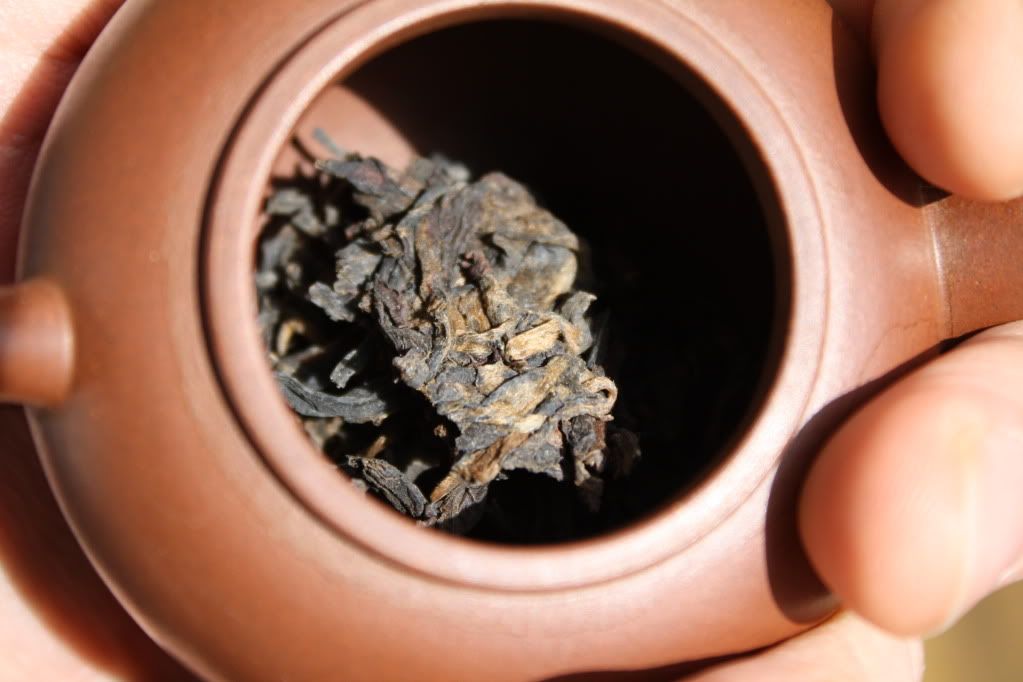
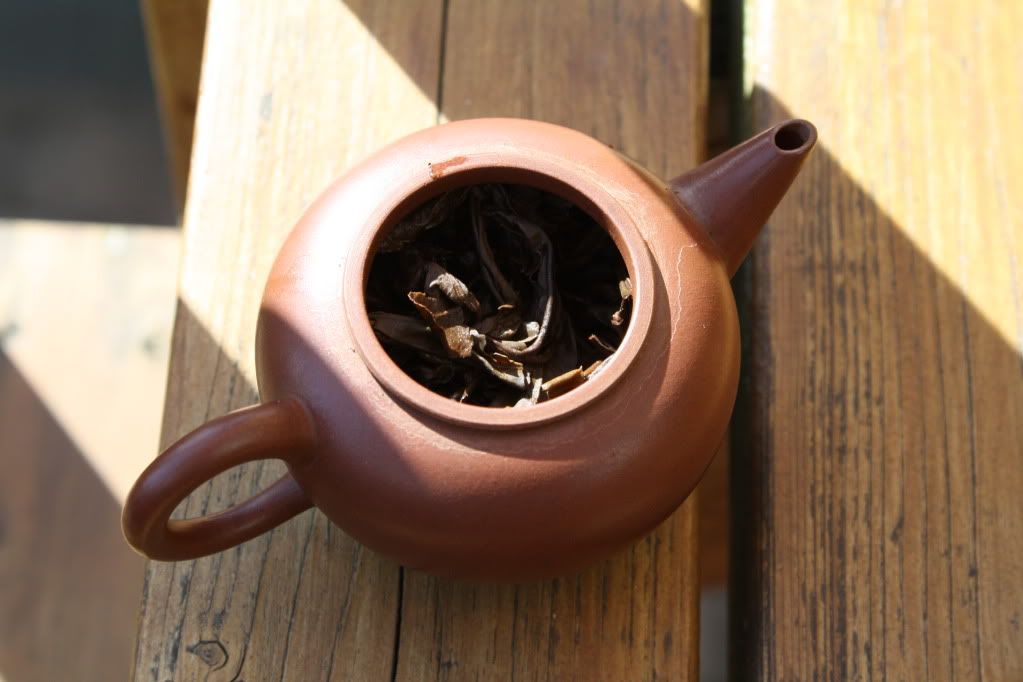
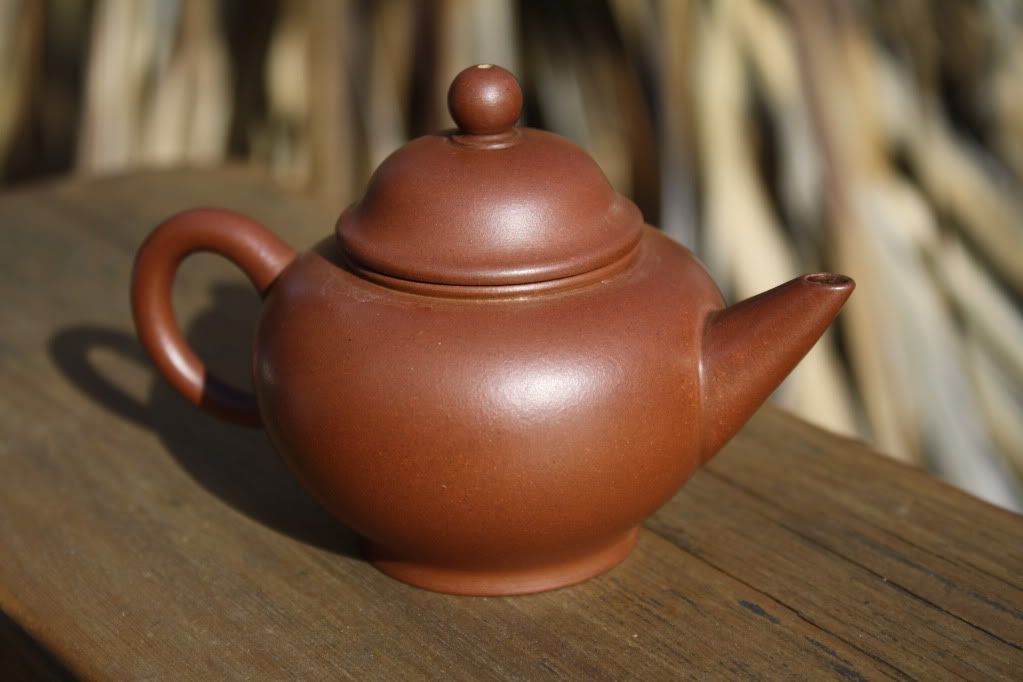
The other day, during my first outdoor tea experience of the year, I sort of realized that, for me, tea on the back porch is mostly pleasurable for the enjoyment that sitting in the sun brings.  The open air seems to significantly reduce the sensitivity of my nose and taste buds, and on cool spring days the water can take forever to heat up!  I've had several sessions with rather nice teas that just came across as ho-hum; perhaps the wind carries off some vapors and aromas that tend to linger better in a still room.  Additionally, there's more competition with other delightful aromas--the buds are on the trees, people are mowing lawns, and let's not discount the sensory competition of chirping birds and bright colors (my brain can only focus on so much stimulation at once).  There is less of a wait for the cup to cool to drinking temperature, though, and direct sunlight brings out a lot of interesting nuance in the surface of yixing ware that you don't normally get inside.  The moral of the story is probably just that I should just select simple but enjoyable everyday teas when I get the bug to venture outside with my tea set.  That, and it's time to start working on an indoor sun room solely dedicated to tea drinking.

March 8, 2011

Another teaware sale addition


After much internal deliberation I've decided to add this 95 ml bad boy to the ongoing teaware sale.  More info here. Sold.

March 3, 2011

Dipping into the Stash

I recently made the somewhat difficult decision to open a large canister of oolong I'd been planning to age.  It's a 2008 Traditional Shui Xian from Jing Tea Shop, and I've been storing it for just about a year myself with hopes of opening it much later and enjoying a delightful aged yan cha (right?).  The present question is, why open it instead of continuing to age it?


From what I've experienced, there seem to be three different types of aged yan cha.  First is the well-roasted type that tastes overly of charcoal when it's first processed.  Impatient me, I usually enjoy and drink these types of tea regularly without aging, but have also had numerous examples of three to five year-old teas that taste really nice.  The charcoal aspect seems to lose its sharpness and ease off into a more rounded, mellow darkness.  I wouldn't really consider these teas aged--more "set-aside" to balance the flavors and become ideal for drinking.  For the most part, they still taste like young yan cha.  The second kind of aged yan cha is the well-aged, old variety.  Here we're talking much older, definitely more than 10 years and upwards of 15 or 20.  These teas don't taste much like young yan cha at all.  They're more like other aged (usually Taiwanese) oolongs--plummy, mellow, sweet, and without as strong a tea taste.  If they were heavily roasted when they were young, they're usually full of dark flavor notes, and if they were less roasted then they tend to have more shifting, sometimes sour high notes.  I'd venture to call this the ideal for aged yan cha.  The third type of aged tea is more of an odd duck--I've tasted teas of this stripe that were supposedly from the 90's, and I've tasted teas that taste eerily similar that range from five to only a couple of years old.  They generally don't taste like young yan cha (not much of a charcoal note at all) but they don't taste like the other aged yan cha.  The flavor is vaguely plummy and a bit aged, but not usually as complex as the second type.  There's nothing wrong with this type of aged tea, but from the ones I've had, they all taste pretty similar to each other and none have been as satisfying as an "ideal," a "set-aside" or just a good new yan cha.  My experiences are pretty limited, so this type may be what's considered standard aged yan cha, so maybe I'm getting it wrong, but I'm really hoping that not very many of the teas I've set aside turn out this way.
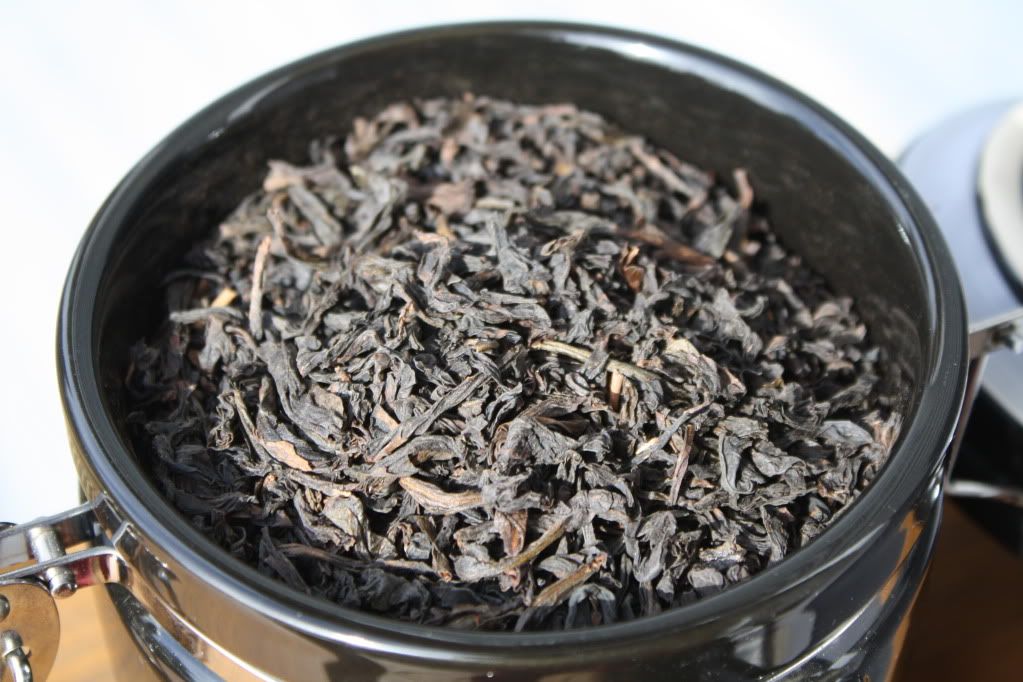

This brings me back to the tea I've just reopened.  When I chose to age some of it a year ago I did so based on the fact that I really enjoyed drinking it--though it's a very reasonably-priced tea ($7/oz, I think) it has the roast level, body and flavor/aroma I look for in an everyday yan cha.  I've since had a bit of trouble finding teas like this to drink regularly, let alone age.  In the meantime I've been trying a number of "aged" teas of the third variety that make me worry for my aging experiments.  If this tea were to turn out like those, I'd end up with a passable but not excellent aged tea that I would have enjoyed much more in its youth.  It seems like it's probably better to leave the aging risk to the other teas I've set aside that aren't quite as high on my "ideal to drink now" list.  If they don't turn out fantastic, at least I won't have lost the chance to drink them when I would have enjoyed them most.  After a year's home storage, this tea is still tasting really nice.  It's still a bit drier than the 2010 Traditional Shui Xian, but it still has the nice creamy mouthfeel that its younger counterpart has in even more abundance.  Its roast is pretty high, if not the highest I've had, which puts it in the first category, which is probably the one I prefer most on a daily basis--it's a tea that's been set aside for a few years and it's reached an ideal balance but still tastes like new yan cha.

This last point touches on an interesting lesson I have to continually remind myself about.  That is, you always have to ask yourself why you're aging a tea.  Is it an experiment--can my aged tea taste as good as the one I bought that was aged by somebody else?  Is it because the tea is shitty and you're hoping the aging process will turn it into something worth drinking?  I've got a couple of those.  Is it because you prefer the aged version of the tea and aren't interested in the young one?  That's basically my stance on young sheng pu-erh, which I appreciate but rarely drink for enjoyment.  When I buy young sheng, it's purely for the sake of aging--the main risk is that it won't age.  If you buy something with the intention of aging it but actually love it just how it is now, you could find yourself wishing you drank it when it tasted how you liked it.  It's easy to get caught up in the "aged is better" attitude but you'll always benefit if you're realistic about your tastes.  I drink aged oolongs casually and occasionally, so why should I commit a huge amount of tea to aging when I'd enjoy it more now, even if it turns into a good aged tea?  No sense incurring "ager's remorse"!
February 24, 2011

Jing Tea Shop 1984 Jia Ji Tuo Cha


It's been a while since I've done a specific tea review, so here's one.  This tea's either still available or now unavailable, depending on where you look on Jing's website ('Rare Teas' for the former, 'Raw Pu-erh Tea' for the latter).  I eyed this tea for quite a while from afar--watching as it sold out and was restocked, wondering if it was worth $1.45/gram.  I try not to nickel and dime too much about these kinds of things, but this tea wasn't available as a per-gram sample, so the stakes were higher.  Obviously I eventually caved under the auspices of the classically pathetic "birthday present to myself." 

This tea is ultimately a bit disappointing, but mostly in relation to its price--I can point with every finger on one hand (maybe some on another) at less expensive teas at Essence of Tea that I prefer to this one.  In brief, this tuo isn't as mature as I'd hope from a 1984 tea, and it's also less complex and less enduring than I've come to expect from aged pu-erh.  Does this all come down to its storage?  Surely, when it comes to maturity and remaining astringency, but when it comes to complexity and endurance I really have no idea.  A more humid might transform the flavor with a little more depth, but then again the original source material might just not have the complexity found in more famous blend bings.

Really, though, a few years ago this would have been the best aged pu-erh I'd ever tried--the drier storage does bring out a sweetness that for some reason always reminds me of blackberry bushes.  It's quite sweet and soft in the mouth barring a little astringency, and it does survive more brews than an unaged pu-erh.  If this were the only aged pu-erh I'd invested in, I'd probably be pretty upset.  As it stands, it's a rather expensive addition to my modest stash of aged tea that I'll be able to occasionally dip into in order to take the pressure off the better stuff.  I suppose part of the expense goes toward the reminder that not all aged teas are good, and that years aren't always an accurate measure of maturity.

February 18, 2011

More Pot Pics


The last yixing pictures went down pretty well, so here's my other most-used pot.  I use this 1980's tall shui ping for pu-erh.  Since I primarily drink aged sheng pu-erh, that's mostly what's going into this pot, but on the occasion that I drink some younger or adolescent teas, I use this pot too.  It really isn't that important to militantly reserve pots for specific teas or tea types, as the effects of past brews are pretty negligible on how the pot typically brews a tea, especially if you only brew a certain type of tea in it once or twice.  It's really not going to make much of a difference. 


Rather, I'm more focused on how the clay of a particular pot affects the brew, and this pin zi ni is just tender enough to round out the body wile at the same time supporting the tea's aroma.  Since this pot is a bit "newer" and since I don't dip into my stash too often these days (it's easier on my wallet!) the patina is coming a little bit slower, but the inside seems to be darkening more quickly than with some other pots (it's only slightly visible above.


This pot's chop is the same as this one (which is upside down in the picture), and it refers to the fact that the pot was made at Yixing Factory #1 as a graduation model.  Shui ping isn't the most adventurous style of pot, but there's still something powerful about the simple aesthetic.  I really like that this one is a bit taller--the lid isn't quite as wide and has more of a vertical energy.  I think the compressed shape also contributes to its pour, which isn't the fastest but hardly leaks at all.  I've gone through a lot of pots trying to find one that feels right for a particular type of tea, and I hope this unassuming pot will be brewing my pu-erh for many many years.